

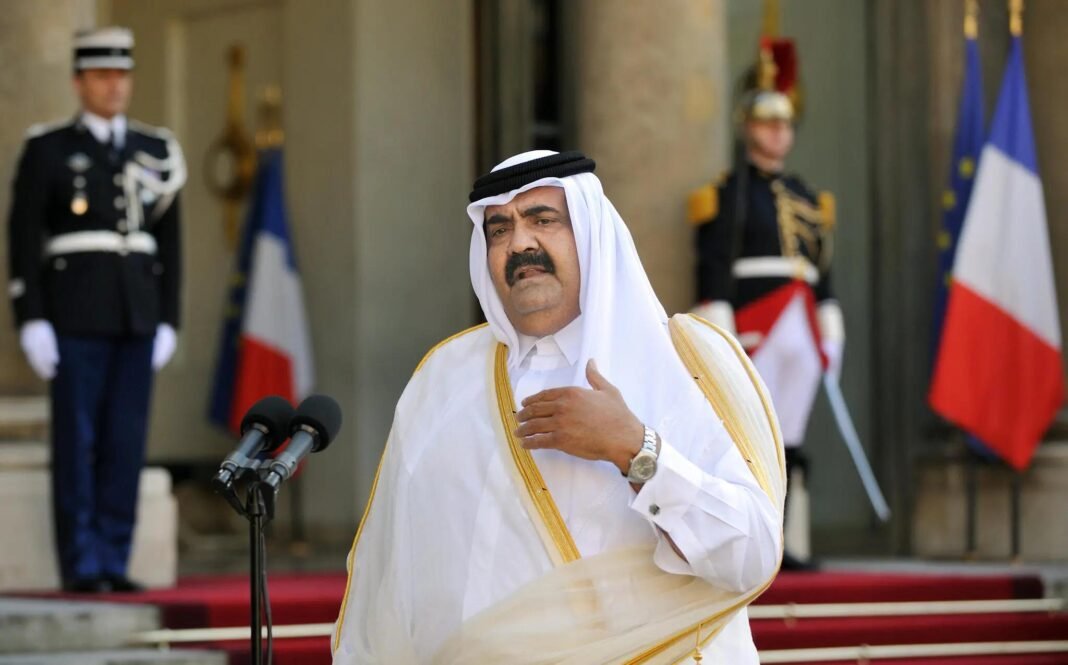
Sheikh Hamad has been remembered as a major figure in Qatar’s modern history following his passing at the age of 74. Sheikh Hamad transformed the country through economic development, energy expansion, international investment, and a stronger global presence, laying the foundation for Qatar’s emergence as one of the Gulf’s most influential nations.
The former emir played a central role in shaping Qatar’s transformation over nearly two decades of leadership. He ruled the Gulf nation from 1995 until 2013 and introduced major reforms across the economy, infrastructure, governance, and foreign relations.
Before becoming emir, Sheikh Hamad gained extensive experience in Qatar’s military and government institutions. He studied at a leading military academy in the United Kingdom before returning to serve his country.
He later became commander of Qatar’s armed forces and served as defence minister. These positions helped prepare him for future leadership responsibilities.
After assuming power in 1995, he focused on strengthening Qatar’s economy. His leadership brought significant progress in energy, infrastructure, investment, and international cooperation.
During his rule, Qatar experienced rapid economic expansion. The country strengthened its position as a major global energy producer and increased its influence in international markets.
Natural gas became one of the country’s strongest economic drivers. Qatar expanded its liquefied natural gas industry and became one of the world’s leading LNG exporters.
Under his leadership, production capacity increased significantly, attracting international investment and global attention. Energy revenues financed major infrastructure projects and supported nationwide modernization.
Sheikh Hamad also introduced important political and social reforms. In 2004, he established Qatar’s first permanent constitution, creating a stronger institutional framework for governance.
Additionally, he supported media development and promoted Qatar’s international engagement. These initiatives helped expand the country’s diplomatic and global influence beyond the Gulf region.
His administration also established major financial institutions to support long-term national wealth. The Qatar Investment Authority became one of the world’s leading sovereign wealth funds, expanding the country’s investment presence across global markets.
Furthermore, he promoted Qatar’s long-term national development strategy. The country’s national vision focused on economic diversification, education, infrastructure, sustainability, and human development.
Major international projects also became central to Qatar’s global ambitions. The country successfully secured the right to host the 2022 FIFA World Cup.
Preparing for the tournament required unprecedented infrastructure investment. Qatar developed modern stadiums, transportation networks, tourism facilities, roads, airports, and urban developments.
The tournament became a historic milestone for both Qatar and the wider region. It marked the first time an Arab and Muslim nation hosted the FIFA World Cup.
Beyond economic achievements, Sheikh Hamad strengthened Qatar’s diplomatic profile. The country expanded partnerships with regional and international governments while playing a more active role in global affairs.
In 2013, he transferred power peacefully to his son, Sheikh Tamim bin Hamad Al Thani. The smooth leadership transition marked a significant moment in Qatar’s political development.
Following the announcement of his passing, leaders from across the region expressed their condolences. Many praised his contributions to Qatar’s modernization, economic success, and growing international influence.
Sheikh Hamad remains closely associated with Qatar’s transformation from a developing Gulf state into a globally recognized economic, financial, and diplomatic power.
Many of the country’s strongest institutions continue reflecting the policies introduced during his leadership. Qatar’s energy industry, sovereign investment strategy, infrastructure network, and international partnerships all evolved significantly under his guidance.
His leadership established the foundation for Qatar’s modern identity. The country’s continued economic ambitions, global investments, and development programs remain closely linked to the vision introduced during his rule.
Overall, Sheikh Hamad’s legacy continues shaping Qatar’s future long after his leadership. Through strategic investments, energy expansion, economic diversification, infrastructure development, and international engagement, he transformed Qatar into one of the world’s leading energy producers and global investors, leaving a lasting impact on the nation’s economy, diplomacy, and international standing.