



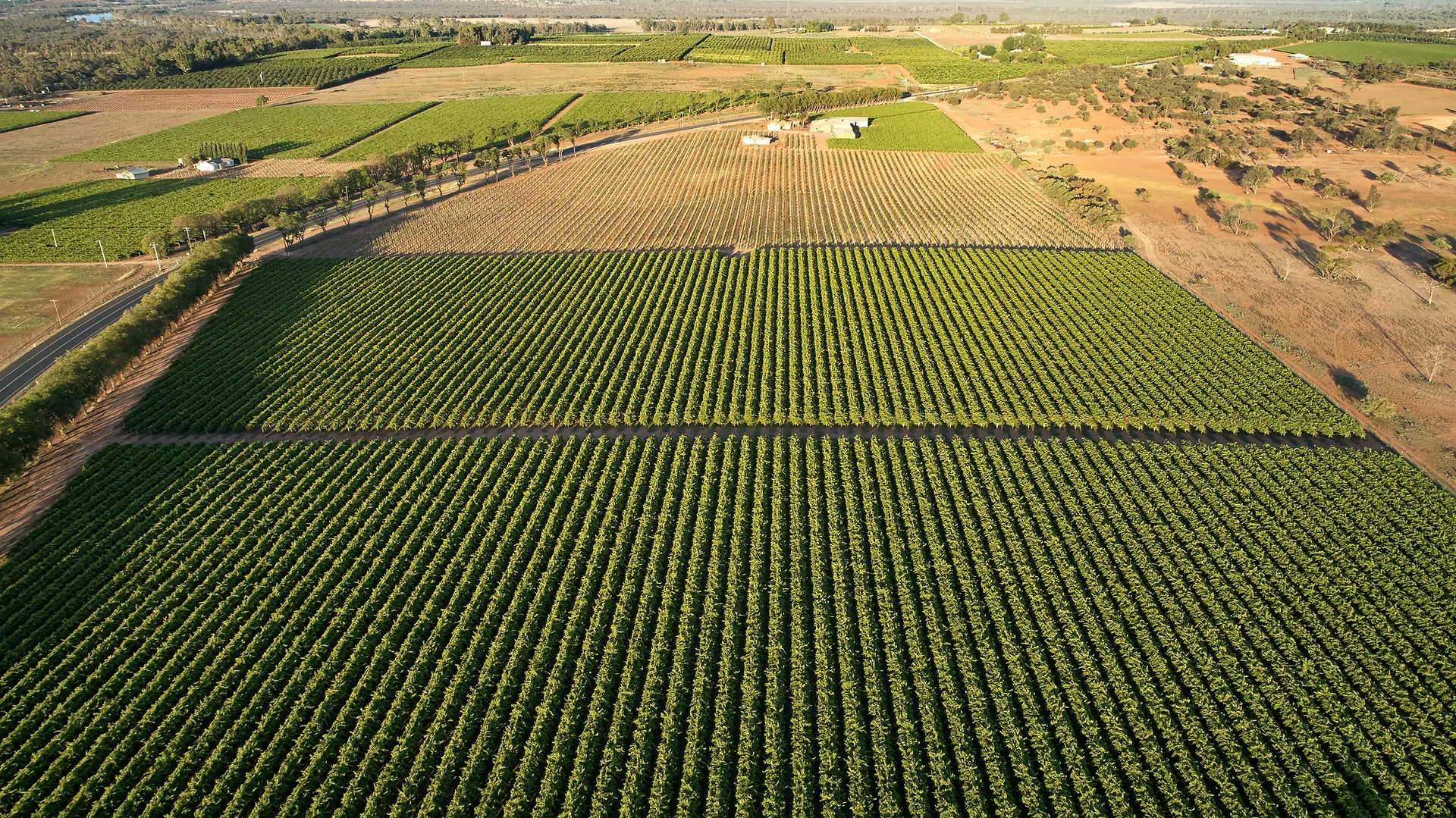
South Batinah attracted more than RO51 million in agricultural, livestock, fisheries and water projects during 2025. The investment reflects Oman’s efforts to strengthen domestic food production. It also aims to create new opportunities for businesses and investors across the governorate.
Agriculture received the largest share of the investment. Twenty-four agricultural projects attracted approximately RO24.8 million. Meanwhile, five livestock projects secured more than RO18 million. A fisheries project received around RO6.8 million, while a water resources project attracted nearly RO1.7 million.
The projects cover several areas of food production, including crop cultivation, livestock farming, aquaculture and food processing. Consequently, authorities expect the investments to support a more diverse and resilient local food supply.
One major development involves banana cultivation in Mussanah. Oman Agriculture Development Company is developing the project across approximately 154 hectares. The investment exceeds RO4 million, while the first phase covers around eight hectares.
Farmers have planted approximately 35,000 William and G9 banana seedlings during the initial stage. The project could increase local banana production as additional phases progress. Furthermore, the development may create opportunities for agricultural employment and supporting businesses.
Mango production represents another growing area in the governorate. Three mango projects cover more than 166 hectares. Together, they involve investments approaching RO3 million. Farmers have planted approximately 35,000 mango seedlings across these developments.
Barka has also attracted investment in integrated food production. Nabatat Al Watan is developing a project combining barramundi farming with organic crops. The development covers nearly seven hectares and carries an investment value of RO6.758 million.
The project brings aquaculture and crop cultivation together within one development. Therefore, it could demonstrate how different food production activities can operate alongside each other. Such projects may also help diversify Oman’s domestic food supply.
Fisheries remain an important part of South Batinah’s economy. The governorate currently has 11 fish farms. Its artisanal fishing sector includes 3,349 fishermen and 1,622 boats.
Six fishing ports support the sector across the governorate. In addition, two fish markets and 77 marketing outlets serve local producers. These facilities help move seafood from producers to consumers and commercial buyers.
Wheat production has also received greater attention. A programme launched during the 2024-25 season covered Barka, Rustaq and Mussanah. Farmers produced approximately 14.7 tonnes of Omani wheat during the programme.
Rustaq accounted for most of the reported wheat production. Authorities continue looking for ways to expand domestic crop production. The goal includes improving food availability while supporting local farmers.
Meanwhile, the food processing sector continues to expand. South Batinah now has 110 manufacturing and storage facilities linked to food production. These facilities include bakeries, water plants, date factories and sweets producers.
The sector also includes coffee and spice businesses. In addition, food factories and warehouses contribute to the wider supply chain. This growing network allows agricultural products to move into processing and distribution.
Authorities are also creating new opportunities for private investors. By 2026, they had offered 28 crop production opportunities through the Tatweer platform. These opportunities cover approximately 97 hectares.
Five additional livestock opportunities cover around 23 hectares. The initiative aims to attract further investment into agricultural and livestock production. Consequently, new projects could increase both production capacity and private-sector participation.
Water management represents another important part of the development strategy. Authorities are working with Nama on projects that use treated water. These developments include mango, watermelon and melon cultivation.
The projects also include the cultivation of aromatic trees. Using treated water can help reduce pressure on groundwater resources. At the same time, it allows agricultural activity to expand more sustainably.
Overall, South Batinah is building a diverse food production ecosystem. Agriculture, livestock, fisheries and food processing all contribute to the governorate’s economic activity.
The more than RO51 million investment also highlights growing confidence in the sector. New projects could create jobs and support local businesses. They could also strengthen connections between farmers, processors and retailers.
Moreover, expanded domestic production can support Oman’s wider food security objectives. Greater local output can reduce reliance on external supplies for selected products. It can also provide farmers with more opportunities to grow their businesses.
South Batinah is therefore emerging as an important centre for Oman’s food production ambitions. Continued investment could further increase agricultural output across the governorate. The combination of new projects, private investment and improved water management could support long-term and sustainable growth.