



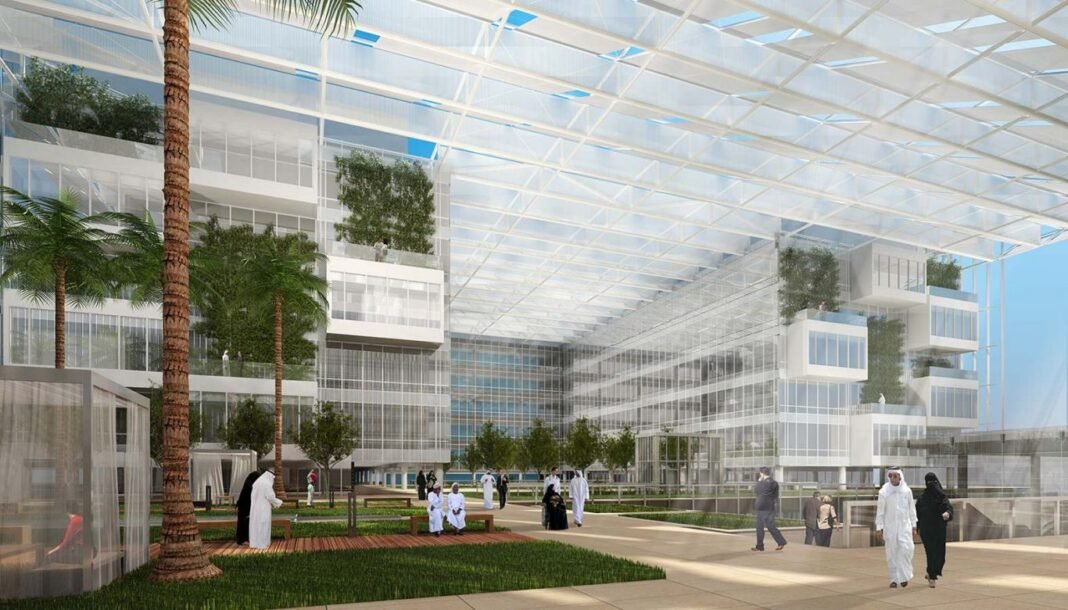
Medical City Project development is moving forward in Bahrain after the Arabian Gulf University signed several major contracts. The agreements will support the completion of a large healthcare and education development near Durrat Al Bahrain.
The project represents a major investment in Bahrain’s healthcare infrastructure. Furthermore, it aims to strengthen medical education, research capabilities, and specialized healthcare services.
The King Abdullah Bin Abdulaziz Medical City remains the main focus of the development. The facility will create advanced medical spaces and improve healthcare services across the country.
The first phase covers approximately 82,000 square metres. Additionally, the project is expected to include specialized facilities with more than 280 hospital beds.
Officials expect the medical city to create over 1,000 job opportunities. Moreover, it will support medical training and encourage research development in Bahrain.
The Arabian Gulf University signed the contracts with several companies. These agreements cover technology systems, construction services, campus improvements, and research facilities.
Furthermore, the development will receive supervision from the Saudi Fund for Development. The project receives support through a grant from Saudi Arabia.
One agreement focuses on installing an advanced technology system for the medical city. The system will include information technology infrastructure, cybersecurity solutions, and healthcare platforms.
As a result, the facility will have stronger digital capabilities. These systems will support daily operations and improve service efficiency.
Additionally, another contract covers furniture, interior solutions, and non-medical equipment. The work will prepare different facilities for future operations.
The university also signed agreements to improve campus infrastructure. These projects include student housing, educational spaces, and research facilities.
Meanwhile, improvements will continue at the student housing complex in Zallaq. The development includes upgrading water networks and building new storage tanks.
The project will add two water tanks with a combined capacity of 8,000 cubic metres. Furthermore, teams will replace old pipelines and modernize related infrastructure.
These upgrades will improve water quality and create more reliable services. Therefore, residents will benefit from stronger and more sustainable facilities.
The university is also enhancing safety systems across student housing areas. New electronic gates and access control systems will improve security.
Additionally, new transportation areas will improve campus movement. The project includes air-conditioned waiting spaces for student buses.
The development plan also includes improvements to sports and recreational facilities. The university will upgrade the AGU Club in Zallaq.
The renovation will add new sports areas and modern facilities. These include football, volleyball, basketball, and padel courts.
Furthermore, existing recreational areas will receive improvements. The upgrades aim to create a better environment for students and university staff.
The university is also expanding its Medical Skills and Simulation Centre. The project will add 24 new simulation rooms with advanced training equipment.
As a result, the center will have 44 simulation rooms. This expansion will improve clinical education and medical training quality.
Moreover, research laboratories at the university will receive major upgrades. The improvements will include new equipment, updated infrastructure, and modern laboratory furniture.
The university will also relocate and renovate its animal research facility. The new facility will provide improved research conditions and better operational standards.
Overall, the Medical City Project represents a major step in Bahrain’s healthcare development strategy. It combines healthcare services, education, research, and modern infrastructure.
The project will strengthen Bahrain’s position as a regional healthcare destination. Additionally, it will support innovation and create new opportunities in the medical sector.
Medical City Project progress highlights Bahrain’s commitment to improving healthcare capabilities. Through continued investment in healthcare infrastructure, medical education, and advanced research facilities, the project is expected to strengthen the Kingdom’s healthcare sector, create skilled employment opportunities, and reinforce Bahrain’s position as a leading regional hub for medical services and innovation.