



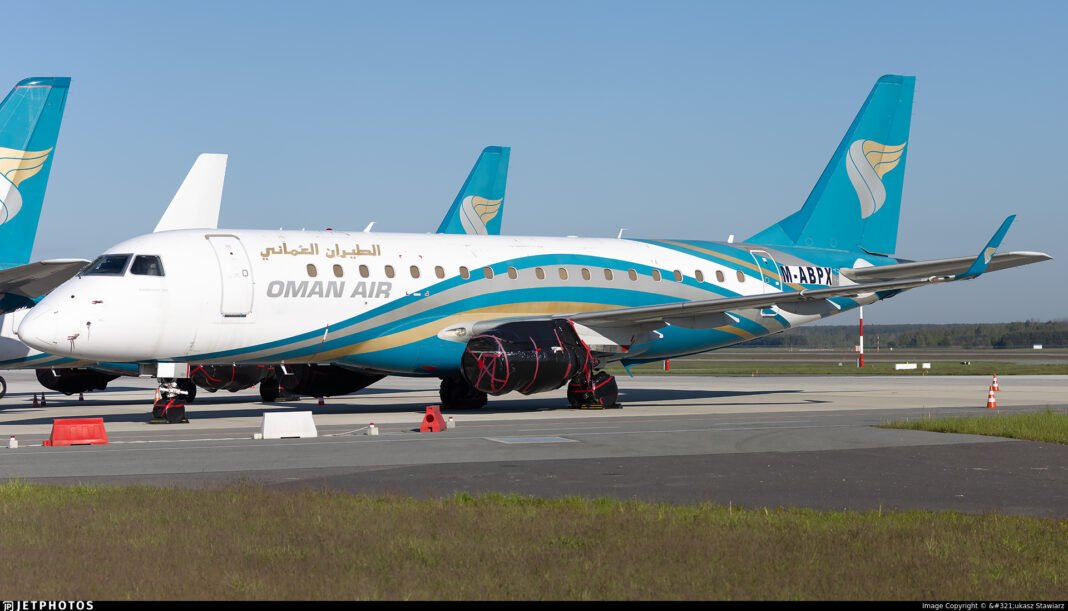
Oman Air cargo plans to rebuild its freighter business through partnerships with other airlines. The carrier wants to expand capacity while limiting financial risks during the recovery. The airline previously operated a dedicated Boeing 737 freighter. However, it sold the aircraft in 2025 during a broader restructuring programme aimed at reducing losses and managing accumulated debt.
Oman Air then recorded its first operational profit in 15 years during 2025. Therefore, management now wants to expand cargo activity without creating excessive costs. Mike Duggan, the airline’s head of cargo, said the company prefers a cautious approach. Initially, Oman Air will seek agreements that provide cargo capacity without requiring new freighter aircraft. The carrier is discussing potential arrangements with airlines across India, Africa, Asia and Europe. These agreements could allow customers to reserve cargo capacity on selected flights.
This approach would give Oman Air greater flexibility as market conditions continue to change. It could also help the airline rebuild its dedicated cargo offering gradually. Meanwhile, regional disruptions have strengthened Muscat’s position as an alternative logistics centre. Several airlines reduced or suspended services during the regional conflict. As a result, some cargo traffic shifted away from major Gulf hubs. Muscat gained additional flows as companies searched for reliable alternatives.
Oman Air continued operating through much of the disruption. Its cargo volumes remained relatively stable despite major changes across regional aviation networks. Furthermore, the airline benefited from reduced competition from several international carriers. This created additional opportunities for cargo movements through Muscat. The carrier has also expanded its passenger network to support cargo connectivity. New destinations include Singapore, Tashkent and Sochi, while additional services to Guangzhou and Madrid are planned.
In addition, the airline launched a road cargo service linking Dubai and Muscat. The service began in May as part of wider regional supply-chain cooperation. The road connection allows cargo to move between the two cities before connecting with wide-body aircraft. Therefore, customers can access capacity beyond Oman Air’s narrow-body aircraft. The service has completed more than 120 round trips since its launch. It has also transported more than 1.5 million kilograms of cargo.
Oman Air now plans to extend the road service across more Gulf markets. Bahrain, Kuwait, Qatar and Saudi Arabia could join the network. The expansion could strengthen Muscat’s role within regional cargo supply chains. It could also help Oman capture additional trade flows from neighbouring markets. However, cargo yields remain an important challenge for the airline. Oman Air reported a decline of roughly 15 percent to 20 percent between 2024 and 2025.
Greater passenger capacity contributed to the pressure on cargo pricing. India and Thailand also received additional belly-hold capacity during the period. Despite weaker yields, cargo tonnage increased during 2025. Higher aircraft utilisation helped the airline move more freight across its network. The regional conflict has also increased operating expenses for cargo services. Higher fuel, insurance and security costs have added further pressure. Oman Air introduced additional fuel and war-risk charges during March to offset some of these expenses.
Nevertheless, cargo load factors have remained broadly stable around the mid-70 percent range. Revenue has also benefited from stronger yields and additional surcharges. Oman Air cargo now faces an opportunity to build on Muscat’s growing logistics importance. The airline can expand capacity without immediately committing to new freighter aircraft. The strategy also supports Oman’s wider aviation ambitions under its National Aviation Strategy 2040.
The national strategy targets more than 40 million passengers annually. It also aims to move around one million tonnes of air cargo each year. Additionally, aviation should contribute more than 3.5 percent to national GDP. Therefore, partnerships could provide an important bridge toward those long-term targets. Oman Air can strengthen cargo connectivity while maintaining tighter control over investment.
For now, the airline appears focused on flexibility rather than rapid fleet expansion. This approach could allow it to respond quickly as regional cargo demand evolves. If market conditions remain favourable, Oman Air could eventually reconsider dedicated freighter aircraft. However, partnerships and expanded connectivity offer a lower-risk path forward. The strategy places Muscat at the centre of Oman Air’s cargo ambitions. It also gives the carrier new opportunities as regional supply chains continue to adjust.

