



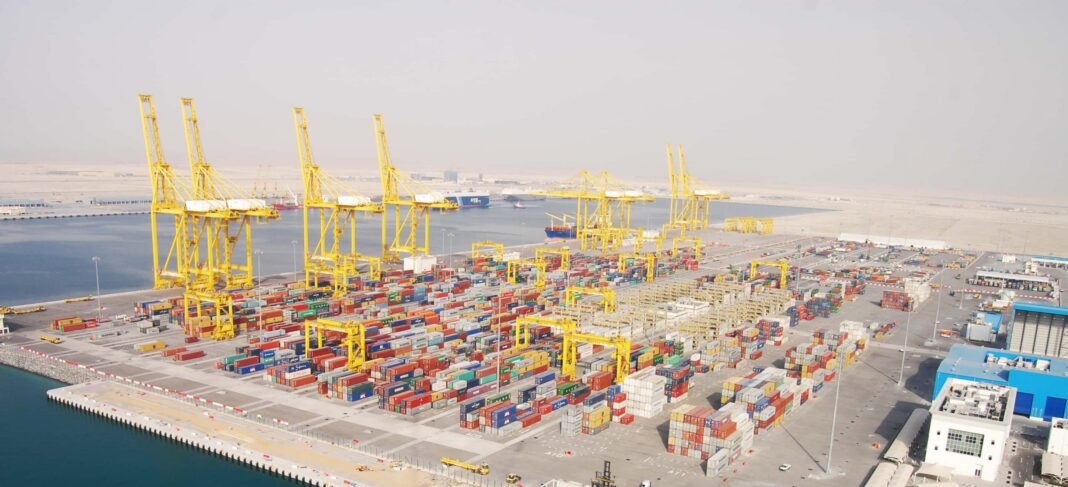
Qatar food security continues to gain support from Hamad Port’s expanding logistics and maritime operations. The port handled more than 90,000 tonnes of grain between May and July. That volume helped maintain steady supplies of essential food products across the country. Furthermore, the strong performance highlights Qatar’s long-term investment in supply chains. It also demonstrates the importance of reliable maritime infrastructure for domestic markets.
Hamad Port serves as one of Qatar’s most important trade gateways. Its facilities support the movement of food, consumer products, and other essential cargo. In addition, its extensive maritime connections strengthen Qatar’s position within global trade networks. The port connects Qatar with more than 100 destinations around the world. Consequently, these connections help businesses maintain dependable supply routes throughout the year.
The port’s operations also support the country’s broader economic development strategy. Modern infrastructure allows Hamad Port to handle large volumes of cargo efficiently. At the same time, advanced systems help coordinate vessels, containers, and trucks. These systems operate around the clock and support continuous cargo movement. Therefore, businesses can rely on the port for consistent logistics services.
Captain Abdulaziz Nasser Al-Yafei highlighted the port’s importance to Qatar’s supply network. He serves as executive vice-president of operations at Mwani Qatar. According to him, Hamad Port represents a major gateway for national trade. Its international connections support food supplies and exports. Moreover, the port has significant capacity for future growth.
Hamad Port can handle up to 7.5 million twenty-foot equivalent units annually. This capacity gives Qatar additional flexibility as trade volumes increase. It also allows the port to accommodate changing domestic demand. Meanwhile, ongoing improvements can further strengthen its operational capabilities. These factors make the facility increasingly important for Qatar’s long-term logistics strategy.
The port also uses an integrated 24-hour operating system. The system tracks vessel activity and container movements throughout the day. It also monitors truck operations and coordinates different logistics activities. Additionally, the system supports preventive maintenance and emergency preparations. These measures help reduce disruptions and keep cargo moving efficiently.
Strong cooperation between government bodies also supports the port’s operations. Mwani Qatar works with several agencies and industry partners. These include the Ministry of Transport and the Ministry of Interior. The Ministry of Commerce and Industry also plays an important role. Customs authorities and Qatar Navigation contribute to the wider logistics network. Together, these organisations help simplify procedures and improve cargo movement.
Hamad Port also offers specialised facilities for food-related activities. These facilities provide storage, processing, and packaging services for food products. As a result, the port plays a role beyond traditional cargo handling. Imported products can move through several stages before reaching distribution channels. This integrated approach supports greater efficiency across Qatar’s food supply system.
The port’s food-related facilities also strengthen the country’s ability to manage imports. Qatar depends on reliable international supply routes for many essential products. Therefore, efficient ports remain critical to maintaining stable supplies. Hamad Port helps connect international producers with Qatar’s domestic market. At the same time, its infrastructure supports businesses involved in food distribution.
Mwani Qatar continues to develop Hamad Port according to market requirements. The company is strengthening partnerships with international shipping companies. It is also investing in infrastructure and new operational solutions. These efforts aim to support increasing trade volumes and changing customer needs. Furthermore, they could strengthen the port’s role in Qatar’s future economic plans.
Qatar food security depends on more than food imports alone. It also requires reliable transportation, storage, processing, and distribution networks. Hamad Port contributes to each of these areas through its specialised infrastructure. Its growing capabilities therefore support the wider national supply chain. Moreover, efficient logistics can help businesses respond more quickly to market demand.
Hamad Port began operations in 2016 as part of Qatar’s maritime development programme. Since then, the facility has undergone several development and expansion phases. These improvements have increased its ability to handle different types of cargo. They have also strengthened Qatar’s maritime infrastructure. Consequently, the port has become a central part of the country’s trade system.
The latest grain-handling figures demonstrate the importance of this continued investment. More than 90,000 tonnes of grain moved through the port within three months. Such volumes require coordinated operations and dependable infrastructure. They also demonstrate the port’s ability to support essential imports at scale.
The port’s role could become even more important as Qatar’s trade network expands. Global supply chains continue to face changing costs and logistical challenges. Therefore, reliable maritime connections can provide important economic advantages. Qatar’s investment in Hamad Port gives businesses additional options for international trade.
At the same time, specialised food facilities can improve supply-chain efficiency. Businesses can use these services to manage products after their arrival. This can reduce unnecessary movement between separate facilities. It can also support faster preparation for distribution across the

