



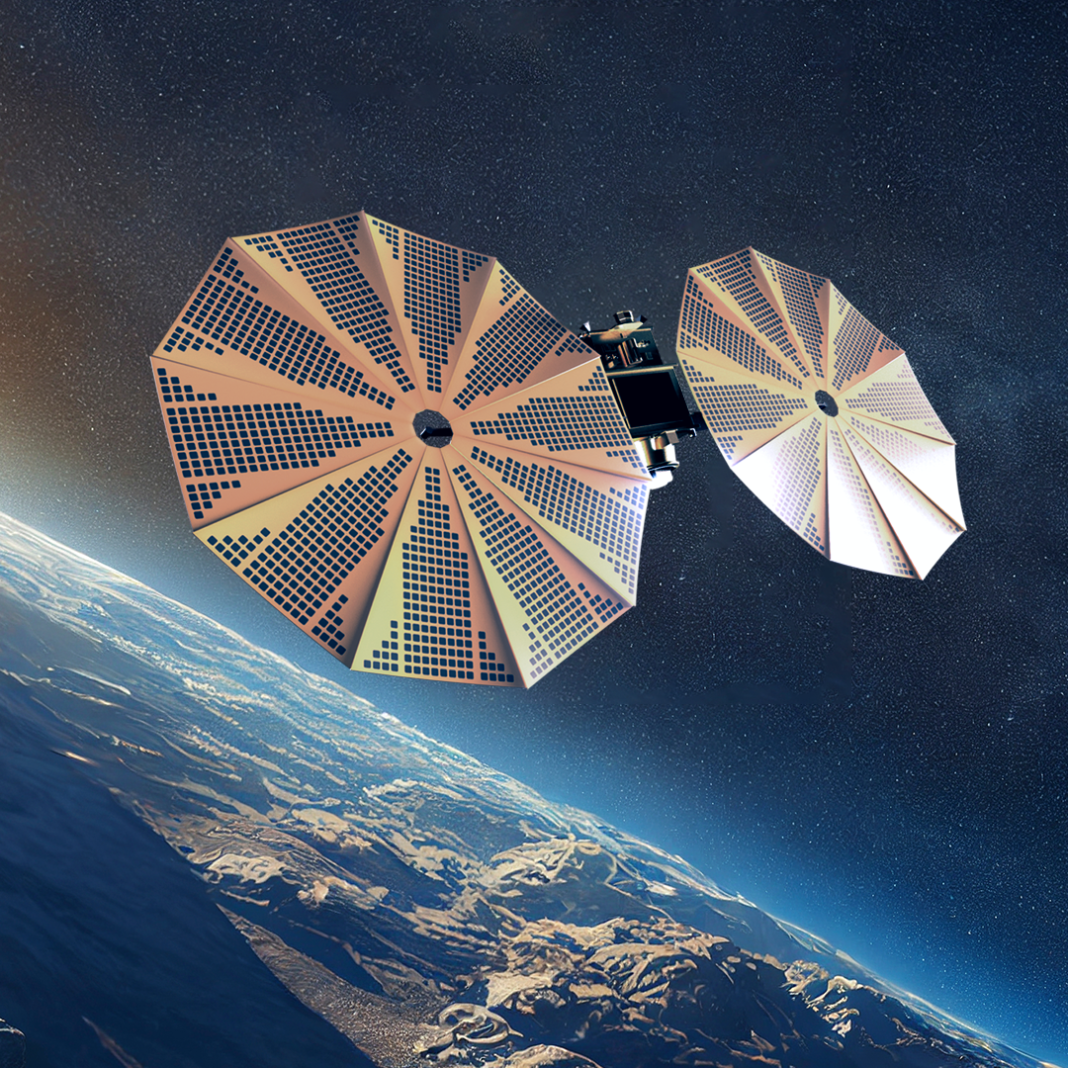
The UAE space mission is preparing a major journey toward an ancient asteroid between Mars and Jupiter. The mission will travel about five billion kilometres across the solar system. It will launch from Japan in March 2028 and reach its destination in 2036. The project marks another major step in the UAE’s growing space technology capabilities.
The spacecraft, known as MBR Explorer, will spend eight years travelling through space. During its journey, it will use gravity from Venus, Earth and Mars to adjust its path. These gravity assists will help the spacecraft travel across the solar system more efficiently. Meanwhile, the mission will also study several other asteroids along its route.
MBR Explorer will conduct fly-bys of six asteroids before reaching its main destination. It will capture images and collect scientific information during those encounters. Eventually, the spacecraft will rendezvous with asteroid 269 Justitia in 2036. Scientists believe Justitia could reveal important clues about the early solar system.
Justitia measures about 54 kilometres across and sits within the main asteroid belt. The belt lies between the orbits of Mars and Jupiter. Scientists have noticed that Justitia appears much redder than many nearby objects. That unusual color could provide clues about the asteroid’s origins and movement.
Researchers believe Justitia may have formed much farther from the sun. They suggest the asteroid could have originated in the Kuiper Belt beyond Neptune. It may have later moved toward the inner solar system. Therefore, studying Justitia could help scientists understand how material moved during planetary formation.
Scientists will search the asteroid for water-related minerals and organic compounds. They will also examine primitive materials that could predate Earth. These materials may preserve evidence from the earliest stages of solar system development. As a result, Justitia could offer researchers a rare look into ancient planetary history.
The spacecraft will first spend months studying Justitia from nearby. It will map the asteroid’s surface and examine its geology and composition. It will also measure aspects of the asteroid’s gravity before the final operation. After completing these observations, MBR Explorer will release a UAE-built impact probe.
The impact probe will begin a ballistic descent toward Justitia without its own propulsion system. The descent could last between two and three hours. During the approach, its cameras will capture increasingly detailed images of the asteroid. The probe could eventually strike the surface at speeds between 15 and 27 metres per second.
Scientists expect the collision to create a small crater on Justitia. That crater could expose material located beneath the asteroid’s surface. The exposed material may provide additional information about Justitia’s composition. The impact could therefore expand the mission’s scientific value beyond surface observations.
The probe will also transmit a final image shortly before impact. If it survives the collision, its battery could continue operating for up to 50 minutes. During that period, the spacecraft could send additional information back to Earth. This design gives researchers another opportunity to collect valuable data.
The Technology Innovation Institute in Abu Dhabi developed and built the impact probe. The institute worked with the UAE Space Agency on the project. About 20 UAE engineers have contributed to its development across several technical fields. Their work covers hardware, software, imaging, communications and thermal systems.
The project also involves HEX20, Khalifa University and the National Space Science and Technology Center. Together, these partnerships support the UAE’s growing domestic space capabilities. The development process has taken little more than two years. It also gives UAE engineers experience with complex deep-space technology.
The UAE space mission could also produce technology with uses beyond space exploration. TII developed a low-power data processing unit for the probe. The system securely stores images while consuming about three watts of power. Researchers see possible applications in autonomous exploration, aerial monitoring and other advanced systems.
The wider UAE space sector has also attracted significant investment in recent years. The sector has drawn about AED44 billion, or $12 billion, in investment. Consequently, projects such as MBR Explorer could strengthen local research and engineering capabilities. They could also encourage further development across the country’s space technology industry.
The mission reflects the UAE’s broader effort to build independent space capabilities. It combines scientific research with locally developed engineering and advanced technology. Moreover, the mission gives UAE researchers an opportunity to study an unusual asteroid directly. Its findings could eventually improve understanding of how the solar system developed.
For the UAE, the project represents more than a distant journey to an asteroid. It demonstrates growing national expertise in spacecraft systems and deep-space exploration. The mission will also test technologies developed by UAE engineers under demanding conditions. Ultimately, its success could strengthen the country’s position in the global space sector.

