



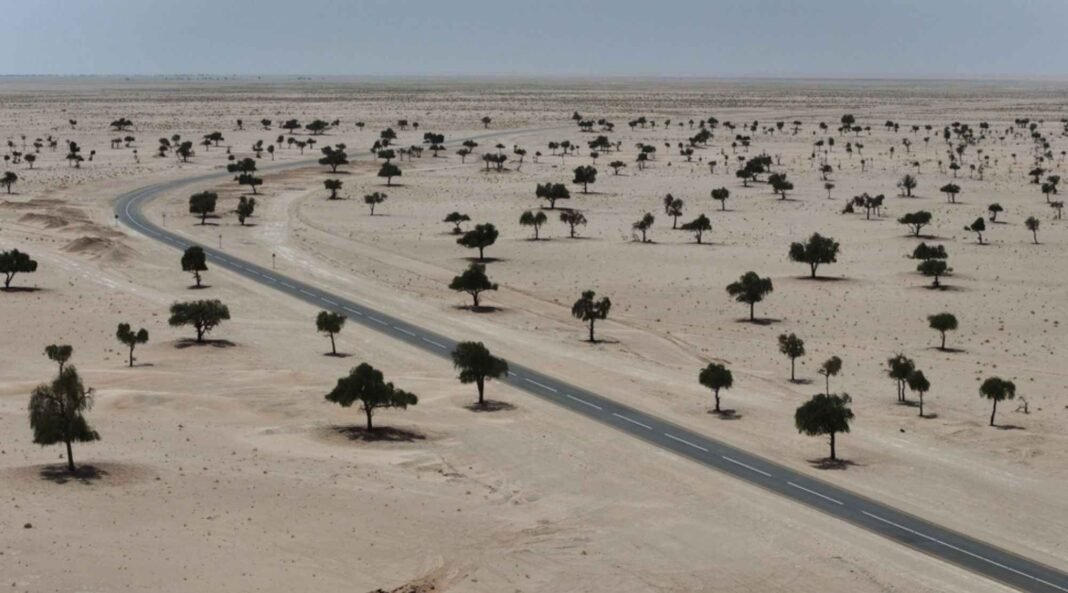
Dhofar roads are receiving a major boost after Oman opened two large infrastructure projects. The projects cover about 380 kilometres across Dhofar Governorate. They include the Harweeb-Mitan Road and an asphalt network in Muqshin. Together, they aim to improve transportation and support wider development across the region.
The Ministry of Transport, Communications and Information Technology inaugurated both projects during a ceremony. Dhofar Governor Sayyid Marwan bin Turki Al Said attended the event. He highlighted the importance of infrastructure in supporting the governorate’s development plans. He also said road expansion will continue across different areas.
The new projects form an important part of Dhofar’s transportation network. Better roads can improve movement between towns and economic centres. Furthermore, they can make travel easier for residents and visitors. They can also support businesses that depend on reliable transport connections.
The Harweeb-Mitan Road covers approximately 210 kilometres. The project includes several connected road sections across Al Mazyunah. One section links Harweeb with Andat over 45 kilometres. Another connects Andat with Tawsanat across 26 kilometres.
The project also includes a 39-kilometre section between Tawsanat and Al Mazyunah. Additionally, the Al Mazyunah-Mitan section stretches for 90 kilometres. Workers also paved a 10-kilometre road between Andat and Habrout. These sections create a stronger transportation corridor across the area.
The route also connects Al Mazyunah with its land port and Free Zone. It continues toward the land border crossing with Yemen. Therefore, the improved connection could support stronger movement of goods. It could also increase commercial activity around the border area.
Officials expect the project to strengthen Al Mazyunah’s position as a logistics centre. Better transport links can help companies move products more efficiently. Moreover, the road could support trade between different economic areas. It may also encourage new investment and commercial activity.
The improved network could create benefits beyond freight transportation. Officials expect stronger connectivity to support tourism and related services. Easier road access can encourage visitors to explore different parts of Dhofar. Meanwhile, businesses can benefit from improved links with population centres.
The project could also support future urban expansion in Al Mazyunah. Better roads can connect residential areas with essential services. They can also improve access to commercial and economic centres. Consequently, residents could experience more efficient daily transportation.
Meanwhile, the Muqshin asphalt road network covers about 170 kilometres. The network connects the wilayat centre with several surrounding areas. These include Mandar Al Dhubyan, Al Mishash, Marsudud, Al Manader, and Shijaj. The project also strengthens connections between these communities.
The Muqshin network will improve the movement of people and goods. It will also provide easier access to public services and facilities. Furthermore, stronger roads can support economic activity across surrounding areas. The project therefore serves both residents and local businesses.
Officials also expect the Muqshin project to support urban development. Improved transportation can connect population centres with production areas. This connection could help businesses use local economic resources more effectively. It could also support tourism opportunities within the wilayat.
The Ministry of Transport continues to develop Oman’s road infrastructure. Officials are aligning these efforts with Oman Vision 2040. The strategy places strong emphasis on economic diversification and sustainable development. Transport infrastructure plays an important role in achieving those objectives.
Minister of Transport, Communications and Information Technology Engineer Said bin Hamoud Al Maawali highlighted the wider benefits. He said Oman seeks to build a modern and efficient road network. The ministry also aims to follow established technical standards. These efforts can improve connections between wilayats and governorates.
Dhofar roads can also contribute to the governorate’s tourism potential. Dhofar attracts visitors through its natural landscapes and seasonal attractions. Better transportation can make these destinations easier to reach. As a result, improved infrastructure could support tourism-related businesses.
The projects can also strengthen social connections across Dhofar. Reliable roads allow residents to reach schools, healthcare facilities, and government services. They also improve access to workplaces and commercial areas. Therefore, transportation improvements can support broader quality-of-life goals.
At the same time, stronger road networks can improve traffic safety. Modern roads can provide better connections between major population centres. They can also reduce travel difficulties across remote areas. Consequently, residents and commercial operators can benefit from more reliable journeys.
The Harweeb-Mitan project carries particular importance because of its regional location. Its connection to the land port supports cross-border transportation. The nearby Free Zone could also gain from improved logistics. This combination may create additional opportunities for trade and investment.
The Muqshin project follows a similar development approach. It connects communities while improving access to production areas. Such connections can help strengthen local economic activity. They can also support more balanced development across Dhofar.
Overall, the two projects represent a significant expansion of the governorate’s road network. They provide new links between communities, services, and economic centres. They also support Oman’s broader infrastructure development goals. In addition, they create stronger foundations for future growth.
Dhofar roads will continue to play an important role in regional development. Improved connectivity can support trade, tourism, investment, and local businesses. Meanwhile, residents can benefit from easier access to essential services. The latest projects therefore extend beyond transportation alone.
The government plans to continue strengthening road infrastructure across Dhofar. Future projects could further improve connections between different wilayats. They could also support emerging economic and tourism opportunities. As infrastructure expands, the governorate can build stronger links between communities and markets.
The latest inaugurations demonstrate Oman’s continued focus on strategic infrastructure. The new roads provide practical benefits for residents and businesses. They also support long-term economic and social development. Consequently, Dhofar enters another stage of infrastructure growth.