



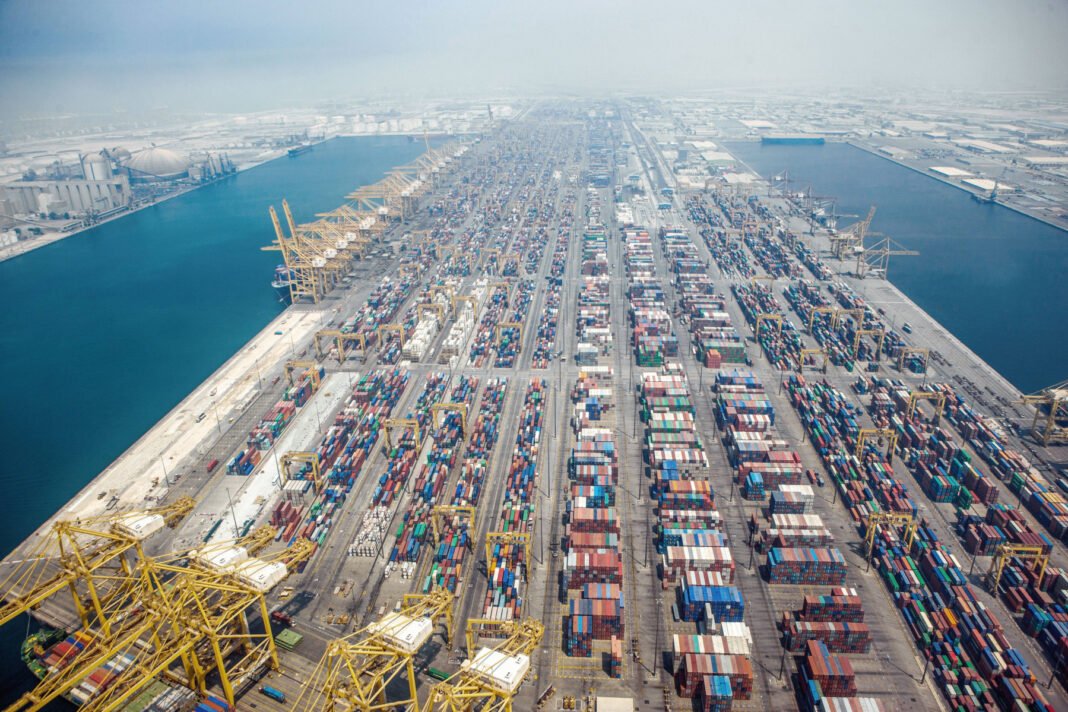
DP World plans to begin major improvements at Tartous Port as part of an $800 million investment programme. The project aims to strengthen Syria’s trade and logistics infrastructure. It also seeks to improve the port’s ability to handle larger vessels and growing cargo volumes.
Tartous Port sits along Syria’s Mediterranean coastline. Its strategic location could help connect Syria with important markets across the region. The port could also strengthen links between Mediterranean shipping routes and neighbouring countries.
Work will initially focus on improving the harbour and existing quay facilities. Dredging operations will deepen the port and support larger vessels. Engineers will also refurbish sections of the quay walls. DP World expects these initial improvements to finish by the end of 2027.
The upgrades should increase the port’s ability to handle larger ships. They should also improve efficiency across cargo operations. Better infrastructure could reduce delays and support higher volumes of goods moving through the facility.
Furthermore, DP World plans to introduce additional cargo-handling equipment later this year. The new machinery should help increase capacity as construction progresses. Three new mobile harbour cranes have already been procured. These cranes could increase cargo-handling capacity by approximately 40 percent.
The company also plans to install nine light-duty mobile harbour cranes. Deliveries are expected during 2027 and early 2028. Another quay crane should arrive in 2028. Together, the equipment will provide additional support for growing cargo volumes.
The project forms part of a broader programme focused on Syria’s economic recovery. Improved port infrastructure could support greater trade and investment. It could also provide businesses with more efficient routes for importing and exporting goods.
Tartous Port could eventually become an important regional logistics gateway. Its location provides access to markets in Iraq, Jordan, Lebanon, and Turkey. This regional connectivity could strengthen Syria’s position within Mediterranean trade routes.
The port could also improve links between regional producers and international markets. More efficient maritime infrastructure would give businesses additional options for transporting goods. This could become increasingly important as Syria seeks to rebuild its economy and expand commercial activity.
DP World agreed to develop and operate the port under a long-term concession. The agreement covers a period of 30 years. The company signed the concession with Syria’s General Authority for Land and Sea Ports.
The agreement came as Syria began rebuilding its economy after years of conflict. The development of critical infrastructure remains an important part of that process. Modern ports can support trade while creating stronger connections with regional and international markets.
The Tartous Port project represents one part of DP World’s wider international expansion. The company continues investing in logistics infrastructure across several major markets. Its global investment programme supports new capacity, trade networks, and connections between important commercial centres.
These investments include developments in the UAE, the United Kingdom, India, and Saudi Arabia. The company has also invested in logistics infrastructure in the Democratic Republic of the Congo. The Tartous development adds another strategic location to its international portfolio.
Meanwhile, the project could create new opportunities for Syrian trade. Better infrastructure may help reduce delays and improve cargo movement. Businesses could also gain access to more efficient shipping services as the port expands.
The improvements could encourage companies to use Syria as a regional transit point. However, the project will depend on successful construction, operational development, and continued improvements across the wider logistics network.
Tartous Port already has an important geographic advantage. Its Mediterranean position provides direct access to maritime routes connecting Europe and the Middle East. The planned infrastructure upgrades could therefore increase its commercial importance.
Larger vessels could allow more efficient movement of goods. Improved cargo-handling equipment should also help shorten operational times. Greater capacity could support higher trade volumes as regional demand develops.
The project could also strengthen connections between Syria and neighbouring countries. Businesses could benefit from improved routes toward Iraq, Jordan, Lebanon, and Turkey. Stronger connections could support trade across several sectors and provide additional opportunities for regional logistics companies.
At the same time, modern port infrastructure can play an important role in attracting investment. Companies often require reliable transportation networks when assessing new markets. Improved facilities at Tartous could therefore support wider economic activity around the port.
The investment could also create demand for logistics, transportation, maintenance, and other supporting services. As cargo volumes increase, businesses operating around the port may benefit from stronger commercial activity.
Overall, Tartous Port stands at the centre of DP World’s planned logistics investment in Syria. The project combines infrastructure upgrades with new cargo-handling capacity. It also provides a potential foundation for expanding Syria’s role in regional maritime trade.
The coming years will determine how quickly the port can expand its regional role. For now, the planned investment signals a major step toward modernising Syria’s maritime infrastructure.
Tartous Port could ultimately become a more important gateway for regional commerce. Its development may also contribute to broader efforts to rebuild Syria’s trade infrastructure and strengthen its connections with international markets.