



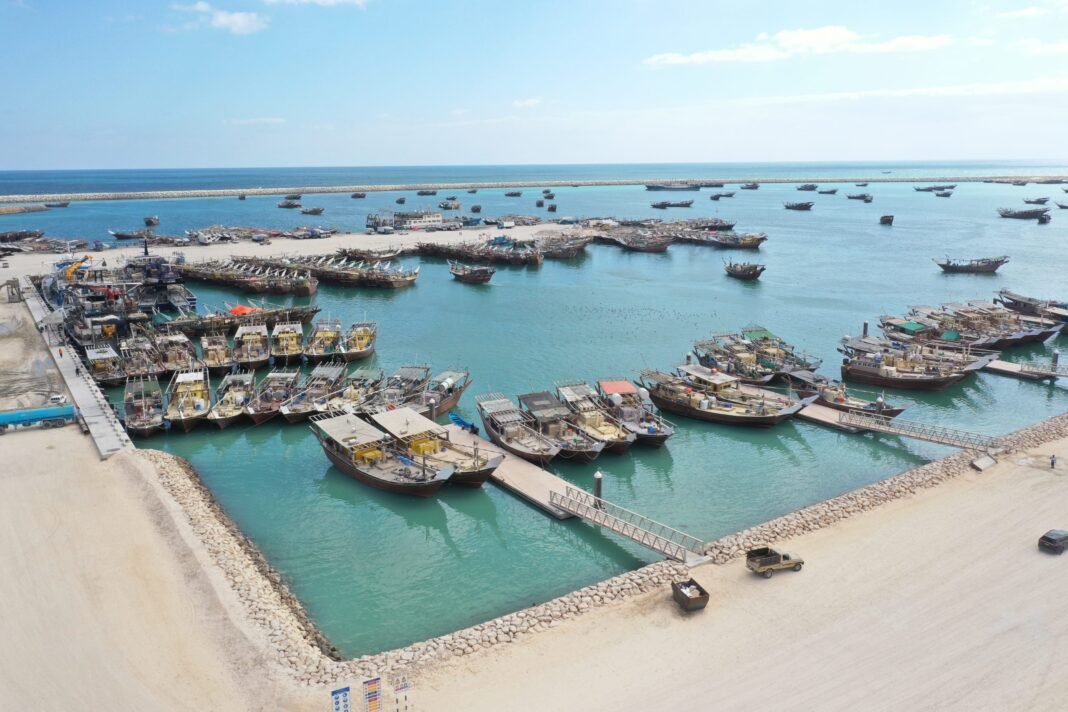
Oman has awarded a major infrastructure contract for the Duqm Fisheries Zone to support industrial growth and attract investment. The Public Authority for Special Economic Zones and Free Zones (OPAZ) will oversee the first phase of development. The project will improve road access and provide essential utilities for businesses. Furthermore, it aims to strengthen Oman’s fisheries, food processing, and logistics industries.
The development includes approximately 8.7 kilometers of internal roads. Contractors will also install integrated utility networks throughout the zone. Authorities expect the first phase to finish within 12 months. Consequently, businesses will gain better access to industrial facilities and supporting services.
Road construction represents a major part of the project. Plans include 7.3 kilometers of single-lane roads and 1.4 kilometers of two-lane roads. The project will also deliver two roundabouts, traffic signs, and road markings. These improvements will help organize vehicle movements and support safer transportation. In addition, better road connections will make it easier for trucks to reach industrial sites.
The infrastructure package also includes several essential utility systems. These cover drainage, drinking water, irrigation, and electricity networks. The project will provide both high-voltage and low-voltage electricity connections. Moreover, street lighting and telecommunications ducts will support industrial operations. Together, these facilities will help companies establish and operate their businesses more efficiently.
Abdullah bin Salem Al-Hakamani, director of technical affairs at the Special Economic Zone at Duqm, highlighted the project’s operational benefits. He explained that connected roads and utilities would serve industrial sites and improve traffic flow. Furthermore, reliable water, electricity, drainage, and telecommunications systems will support daily business activities. These services will also improve transportation, handling, and related operations.
The Fisheries and Food Industries Complex covers approximately 7.5 square kilometers within the Special Economic Zone at Duqm. Its location near the multipurpose fishing port offers important logistical advantages. For example, businesses can connect fish landing activities with processing and transportation services. This arrangement could improve coordination across the fisheries supply chain.
Ibrahim bin Zaher Al-Rawahi, acting director of industrial clusters at the zone, emphasized the project’s investment potential. He said the infrastructure would strengthen links between production, processing, storage, and transportation. As a result, existing businesses could expand their operations more easily. Meanwhile, improved facilities may encourage new companies to establish projects in Duqm.
The Duqm Fisheries Zone development also supports Oman’s broader economic diversification plans. Stronger infrastructure can help local industries create more value from available fisheries resources. Additionally, better transport and utility networks could improve access to domestic and international markets. These improvements may also strengthen food security and support employment across related industries.
The project reflects Oman’s continued investment in its special economic zones. By improving roads and essential services, authorities aim to create a more competitive business environment. The Duqm Fisheries Zone could therefore attract further investment in seafood processing, food production, storage, and logistics. Over time, these developments may help expand Oman’s industrial base and increase the economic contribution of its fisheries sector.

