



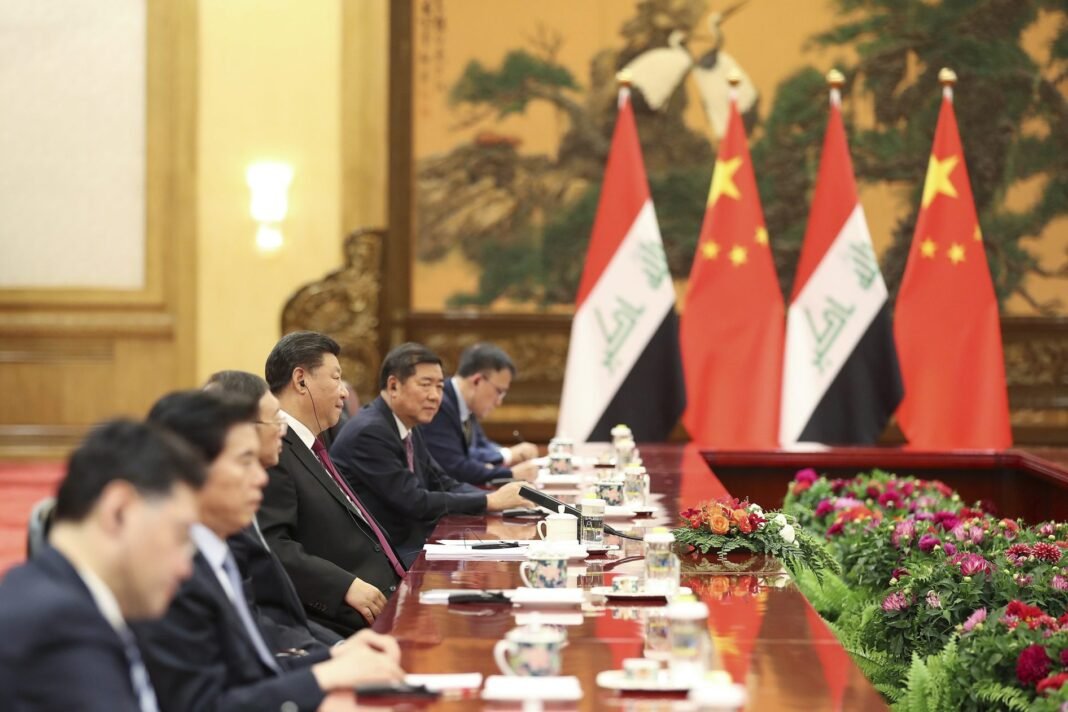
Iraq and China are exploring new investment opportunities following talks between Iraq’s Minister of Trade and a Chinese business delegation. The meeting took place on October 15, 2026, and focused on strengthening economic cooperation. Representatives discussed potential partnerships across investment, banking, and international trade. Moreover, the talks reflected Iraq’s continued efforts to attract foreign businesses and encourage economic development.
The Chinese delegation included companies specializing in investment, financial services, and commercial activities. During the meeting, representatives presented proposals for potential projects and business partnerships. These proposals aimed to identify areas where Chinese companies could cooperate with Iraqi businesses. In addition, participants discussed possible frameworks for developing stronger commercial relationships.
The discussions highlighted the importance of international cooperation in supporting Iraq’s economic ambitions. Foreign companies can bring investment capital, technical knowledge, and access to international markets. Consequently, partnerships could create opportunities for businesses across several sectors. Stronger commercial ties may also help Iraqi companies establish new relationships with overseas partners.
Banking emerged as another important area within the broader discussions. Businesses often need reliable financing to establish projects and expand their operations. Therefore, cooperation involving financial institutions could support future commercial activity. Improved business connections may also help companies explore financing arrangements and cross-border transactions.
Trade cooperation could provide additional opportunities for companies in both countries. For example, businesses may explore new suppliers, customers, and distribution networks. Furthermore, commercial partnerships can help companies understand market conditions and identify potential projects. However, the meeting report did not confirm specific trade agreements or investment commitments.
Iraq continues to seek foreign investment to support economic growth and encourage private-sector development. International partnerships can contribute capital, expertise, and new business opportunities. Meanwhile, foreign companies can explore Iraq’s market and potential demand across different industries. Nevertheless, successful cooperation depends on clear agreements, suitable financing, and practical project planning.
The meeting also demonstrated the importance of direct engagement between government officials and international businesses. Such discussions allow companies to present proposals and identify possible areas of cooperation. In turn, government representatives can better understand investor interests and potential business opportunities. However, further negotiations would be necessary before any proposed project could move forward.
Iraq and China could expand their commercial relationship if both sides develop the proposals presented during the meeting. Still, officials have not announced finalized agreements, confirmed funding amounts, or implementation schedules. Therefore, the discussions represent an initial step toward possible future cooperation. Additional announcements may clarify which proposals will advance into formal partnerships.
Overall, the meeting brought Iraqi officials and Chinese business representatives together to explore shared economic interests. Investment, banking, trade, and business development formed the central themes of the discussions. Although the meeting did not produce publicly confirmed deals, it highlighted interest in closer commercial cooperation. Future negotiations will determine whether these discussions lead to concrete projects and long-term partnerships.

