



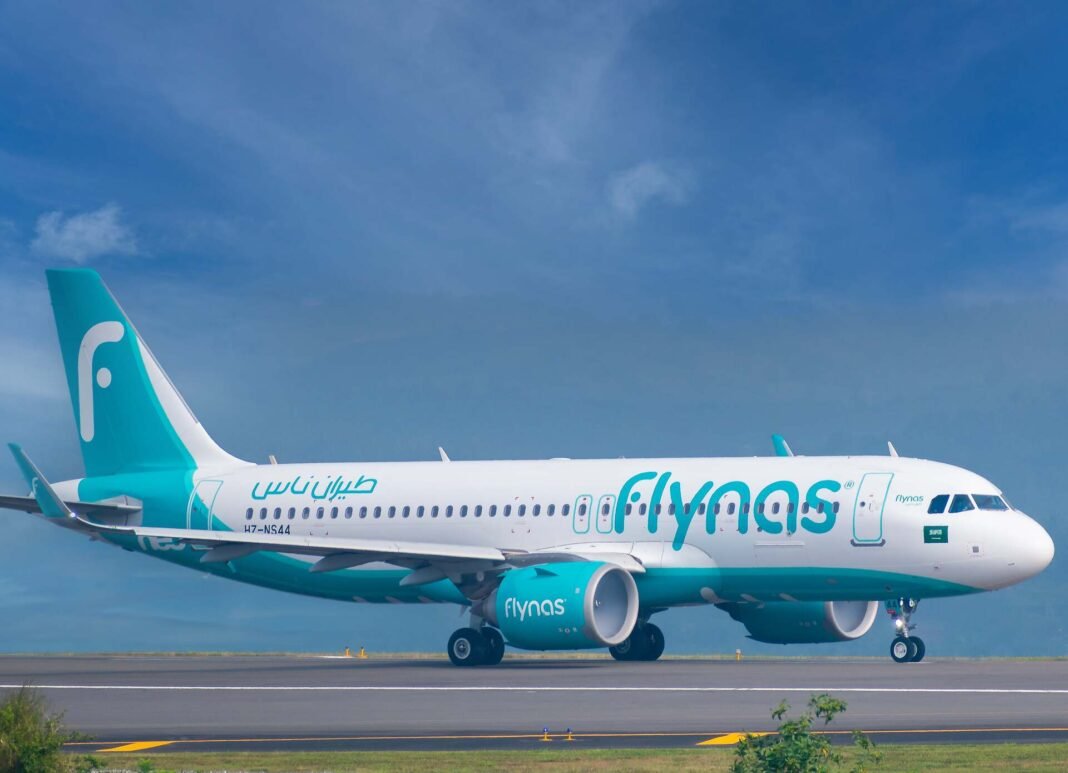
flynas training centre construction has started in Riyadh as the airline expands its aviation capabilities. The project represents an investment exceeding SAR200 million, or about $54 million. The facility will support pilot and cabin crew training across the airline’s growing operations.
The new centre will strengthen training infrastructure within Saudi Arabia’s aviation sector. It will also support the development of skilled Saudi professionals for specialized aviation roles. Furthermore, the project aligns with the Kingdom’s broader efforts to develop national talent.
flynas is developing the facility with several international and local companies. Airbus, CAE, and Restart are among the companies involved in the project. Their participation will support the centre’s advanced training capabilities and technical infrastructure.
The facility will cover approximately 13,000 square meters in Riyadh’s Al Rimal district. It will sit less than 10 minutes from King Khalid International Airport. This location should provide convenient access for aviation professionals and trainees.
The centre is scheduled to begin operations in 2028. Once operational, it will have capacity to train around 700 people every day. The facility will provide integrated programs for pilots and cabin crew.
Training programs will follow international aviation standards and the airline’s operational requirements. This approach will help prepare employees for increasingly complex aviation roles. It will also support the airline as it expands its network and fleet.
The first stage will include three advanced flight simulators. However, the facility has been designed to accommodate up to eight simulators. The centre can also expand further, with capacity for as many as 14 simulators.
The additional capacity gives flynas room to increase training activity in the future. It also allows the airline to respond to changing operational requirements. Therefore, the centre can support expansion without requiring an entirely new facility.
The development will also include practical training areas for safety and customer service. These facilities will provide employees with hands-on experience alongside simulator-based instruction. Consequently, trainees can develop technical and service skills in one location.
flynas Chief Executive Officer and Managing Director Bander Almohanna highlighted the importance of the investment. He said the project demonstrates the airline’s commitment to developing national aviation talent.
The company also views training infrastructure as an important part of its expansion strategy. Saudi Arabia’s aviation sector continues to grow as the Kingdom develops its transport infrastructure. As a result, airlines require more qualified professionals across several specialized positions.
The new facility will allow flynas to expand its internal training capabilities. This could reduce the airline’s dependence on external training providers. It could also give the company greater control over training quality and scheduling.
In addition, the centre could help reduce training expenses over the longer term. Developing internal capabilities can provide greater efficiency as the airline expands its workforce. The company expects the investment to generate sustainable savings.
The project also supports operational readiness. Airlines require highly trained pilots and cabin crew to maintain reliable operations. A dedicated training facility can help ensure employees receive consistent instruction.
The centre’s simulator capacity will prove particularly important as flynas grows. Flight simulators allow pilots to practice complex situations within controlled environments. They can also support recurrent training and professional development.
Meanwhile, practical facilities will support cabin crew development. Employees can train in safety procedures and customer service environments. This combination can help improve overall operational standards.
Saudi Arabia has identified aviation as an important sector within its economic development plans. The Kingdom aims to expand air connectivity and strengthen its position as a global aviation centre. This growth requires significant investment in people and infrastructure.
The flynas project contributes to those objectives by expanding specialized training capacity. It also creates opportunities for Saudi nationals to pursue aviation careers. Therefore, the investment combines business expansion with workforce development.
The flynas training centre could also help strengthen local aviation expertise. Training employees domestically can support the development of specialized knowledge within the Kingdom. Over time, this could contribute to a deeper national aviation talent pool.
The project’s location near King Khalid International Airport provides another operational advantage. Trainees and employees can reach the facility quickly from the airport. The location could also support connections with other aviation businesses.
The centre’s future expansion capacity provides additional flexibility. Starting with three simulators allows flynas to develop the facility gradually. Additional simulators can follow as training requirements increase.
The planned capacity of eight simulators represents a substantial increase in internal training capability. Expansion to 14 simulators could provide even greater capacity later. This design gives the airline room to accommodate long-term growth.
The project also reflects the growing importance of technology in aviation training. Advanced simulators can provide realistic training without requiring live aircraft for every exercise. This can improve efficiency while supporting safety-focused instruction.
Moreover, integrated training can create a more consistent learning experience. Pilots and cabin crew can access specialized facilities within the same centre. This structure can simplify training management and scheduling.
The investment may also strengthen flynas’ ability to prepare employees for future aircraft deliveries. As airlines grow, they need larger pools of trained aviation professionals. Internal training capacity can help companies respond more efficiently to that demand.
The airline expects the project to contribute to long-term operational efficiency. It also anticipates savings from reducing external training requirements. These benefits could become increasingly important as the company expands.
The flynas training centre therefore represents more than a new facility. It forms part of a wider strategy focused on workforce development and operational growth. The project combines training technology with national talent development.
Construction is now underway, with completion and opening planned for 2028. Once completed, the centre will become an important part of flynas’ training infrastructure. It will also contribute to Saudi Arabia’s expanding aviation ecosystem.
Overall, the project highlights the growing demand for aviation skills in Saudi Arabia. Investment in training facilities can help airlines maintain operational standards while expanding. It can also create stronger career pathways for Saudi aviation professionals.
The flynas training centre is expected to support hundreds of trainees each day. Its simulator capacity will provide room for further expansion. Meanwhile, practical training facilities will strengthen safety and service preparation.
As Saudi Arabia continues developing its aviation industry, skilled professionals will remain essential. Investments such as this can help build the workforce required for future growth. They can also support the Kingdom’s ambition to become a major international aviation hub.

