



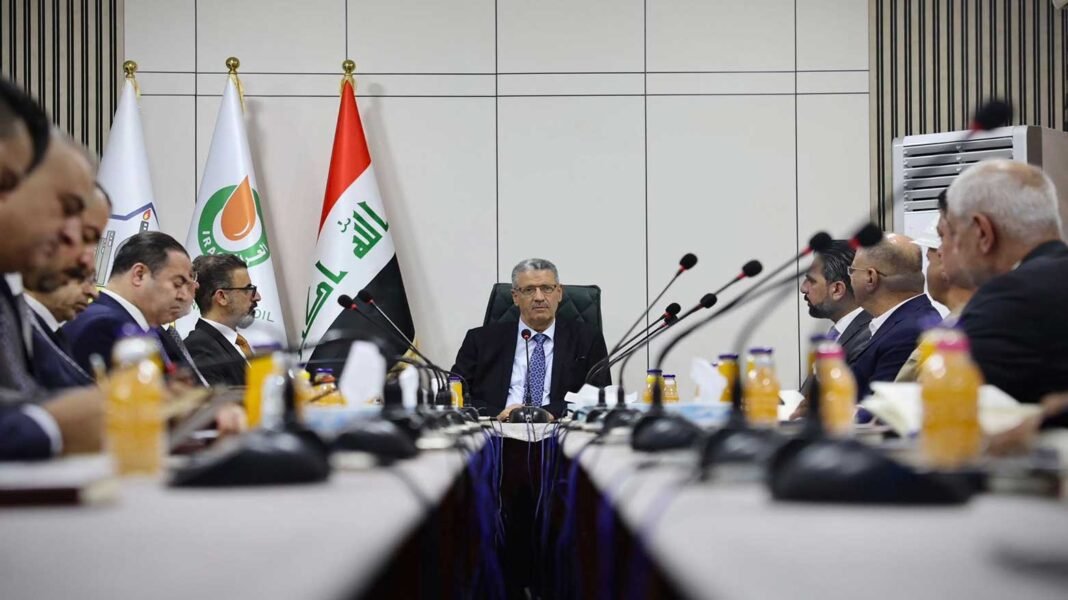
The Iraq oil sector is exploring new development opportunities through discussions with major international energy companies. Oil Minister Basim Al-Abadi met representatives from BP and ConocoPhillips in Baghdad. The meeting focused on strengthening Iraq’s oil and gas industry and expanding cooperation with international partners.
The discussions brought together senior representatives from both companies and several Iraqi energy officials. BP’s Iraq Country Manager Zaid Al-Yassiri attended alongside Nader Zaki and Ariel Flores. ConocoPhillips representative William Arnold also joined the meeting. Meanwhile, senior officials from Iraq’s Oil Ministry participated in the discussions.
The meeting included Naseer Aziz, the Undersecretary for Extraction Affairs. The Director General of Basra Oil Company also attended the talks. In addition, the Director General of the Petroleum Contracts and Licensing Department joined the meeting. Their participation highlighted the importance of investment and technical cooperation within Iraq’s energy industry.
The talks covered several areas connected with the future development of Iraq’s oil and gas resources. However, officials did not disclose specific agreements or investment figures following the meeting. Instead, the discussions appeared to focus on broader development priorities and cooperation opportunities.
For Iraq, international partnerships remain important for improving production and developing existing energy assets. Furthermore, cooperation with experienced international companies can support technical improvements across the sector. It can also encourage investment in infrastructure and modern production methods.
The meeting comes as Iraq continues efforts to strengthen its position as a major energy producer. The country holds significant oil and gas resources across several regions. Therefore, improving field performance remains a central priority for the government.
At the same time, Iraq wants to increase the value generated from its natural resources. This requires continued investment across production, processing and supporting infrastructure. Gas development also remains important because the country seeks to reduce waste and improve domestic energy supplies.
The involvement of both BP and ConocoPhillips adds further significance to the latest discussions. BP has maintained a longstanding relationship with Iraq’s energy industry. ConocoPhillips has also expanded its involvement in the country’s oil development opportunities.
Earlier developments have increased interest in northern Iraq’s oil resources. BP has worked on plans to redevelop major fields in the Kirkuk region. The programme covers oil and gas development alongside related infrastructure improvements.
ConocoPhillips has also agreed to acquire a stake connected with BP’s Kirkuk development activities. The move strengthens its position within Iraq’s upstream oil industry. Consequently, cooperation between the companies and Iraqi authorities could gain greater importance.
The Iraq oil sector also faces several challenges as it seeks stronger long-term growth. Mature fields require continued investment, modern technology and careful management. Moreover, infrastructure requirements can influence the pace of future development.
Gas production represents another major opportunity for Iraq. The country has significant associated gas resources linked to crude oil production. Capturing that gas could support electricity generation while reducing unnecessary losses.
Meanwhile, stronger cooperation could help Iraq improve its overall energy efficiency. International companies can contribute technical expertise and investment experience. Iraqi institutions can also provide local knowledge and oversight throughout development programmes.
The government has increasingly focused on attracting international investment into strategic energy projects. Such investment can support production growth while creating opportunities for local businesses. It can also strengthen employment and technical capabilities within Iraq’s energy industry.
The latest meeting therefore reflects Iraq’s continued push to develop its hydrocarbon resources. It also shows the government’s interest in maintaining relationships with major international energy companies. However, further discussions will likely determine whether specific projects emerge from the talks.
For now, the Iraq oil sector remains focused on development, investment and stronger international cooperation. The latest meeting provides another opportunity to advance those priorities. Further progress could support production growth and improve the country’s wider energy infrastructure.
As Iraq continues developing its resources, international partnerships will remain an important part of its strategy. The government will likely seek projects that increase output and strengthen domestic energy supplies. At the same time, it must balance investment needs with long-term economic priorities.
Overall, the discussions signal continued interest in expanding Iraq’s oil and gas industry. They also underline the importance of cooperation between Baghdad and major international energy companies. Future agreements could determine how quickly new development opportunities move from discussions into implementation.

