

New Murabba has changed its leadership as Saudi Arabia reviews spending across major development projects. The move comes during a broader reassessment of investment priorities. The project has also faced delays and a longer completion timeline.
Sabah Barakat has become the acting chief executive of New Murabba. He is a senior executive within Saudi Arabia’s Public Investment Fund. Barakat also serves as acting group chief executive of Roshn Group. He previously helped lead New Murabba during its early formation.
Barakat replaces Michael Dyke, who had led the development since January 2024. Dyke previously held senior roles on major infrastructure projects in the United Kingdom. His future position within New Murabba remains unclear.
The leadership change comes as Saudi Arabia adjusts the pace of several major development initiatives. The kingdom has invested heavily in projects supporting its economic diversification strategy. However, authorities now face greater pressure to manage spending and project priorities carefully.
New Murabba represents one of Riyadh’s most ambitious urban development plans. The project aims to create a major new downtown district in the Saudi capital. Plans include residential areas, offices, hotels, cultural facilities, entertainment venues, and green spaces.
The development carries an estimated value of around $50 billion. Its planned area will create a large mixed-use destination within Riyadh. The project also aims to strengthen the capital’s position as a global business and lifestyle center.
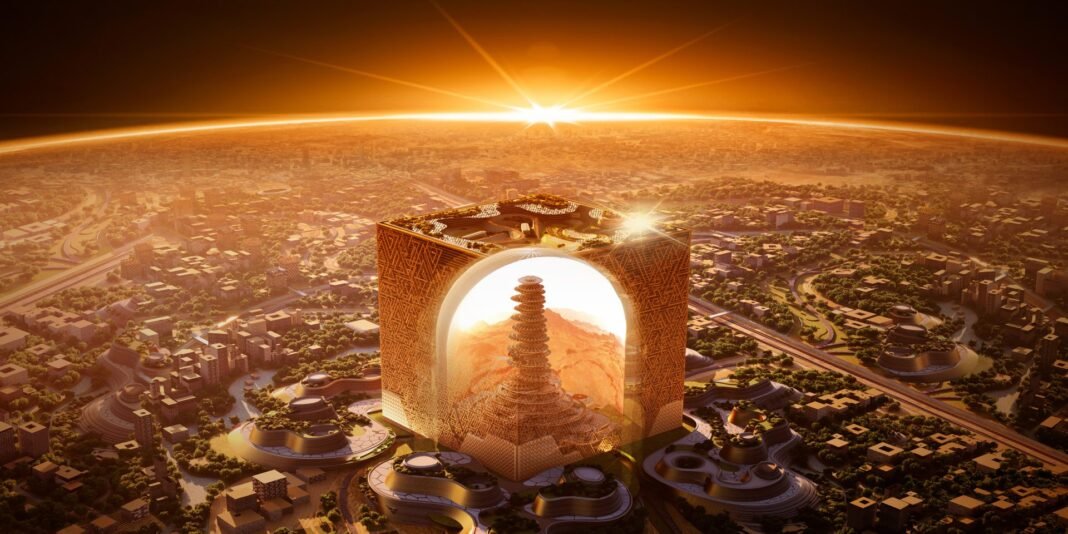
The development includes the Mukaab as its most recognizable centerpiece. The planned structure will stand about 400 metres tall. It will feature residential, hospitality, entertainment, and commercial facilities.
However, the project has faced challenges as Saudi Arabia reviews its major investment portfolio. The original completion target has also moved further into the future. Officials now expect the broader development to continue toward 2040.
The longer timeline reflects a more measured approach to major development spending. Saudi Arabia has been reviewing the scale and timing of several large projects. This approach allows authorities to focus resources on projects with stronger strategic value.
The Public Investment Fund has played a central role in Saudi Arabia’s transformation plans. The fund owns New Murabba and supports numerous major developments across the kingdom. It has increasingly focused on financial performance and efficient capital allocation.
As a result, several projects have experienced changes in their schedules and development plans. These adjustments have created a more selective environment for large construction investments. Developers now face greater pressure to control costs and maintain delivery standards.
New Murabba remains important to Riyadh’s long-term urban strategy. The project could create a major concentration of homes, workplaces, hotels, entertainment venues, and public spaces. It could also support new business activity as Riyadh continues expanding.
The project also gained importance after Saudi Arabia expanded property ownership opportunities for foreign buyers. New Murabba sits among the areas designated for non-Saudi property ownership. This change could support future demand for residential and commercial units.
Foreign ownership could also encourage greater investment in Riyadh’s real estate sector. International buyers may gain more opportunities to participate in the capital’s expanding property market. Consequently, major developments could benefit from a broader pool of potential investors.
Meanwhile, New Murabba continues to develop its wider district beyond the Mukaab. The surrounding areas will include residential and commercial communities. They will also feature cultural destinations and spaces designed for recreation.
The project’s scale means construction will require a long-term development strategy. Therefore, leadership decisions could influence how the project progresses through its next stages. The new management team will need to balance ambition with financial discipline.
The Mukaab remains central to the development’s identity and long-term vision. However, its construction has faced setbacks during the wider project review. The surrounding district can continue progressing while authorities assess the project’s future priorities.
New Murabba also forms part of Riyadh’s broader transformation. The capital continues attracting businesses, investors, residents, and international visitors. This growth creates demand for additional housing, offices, hospitality facilities, and entertainment destinations.
The project could therefore play an important role in meeting that demand. At the same time, developers must carefully manage construction costs and delivery schedules. This balance will remain important as Saudi Arabia advances its economic transformation plans.
The leadership change also highlights the evolving direction of the kingdom’s giga-project strategy. Saudi Arabia continues supporting major developments but now places greater emphasis on execution. Cost management and realistic timelines have become increasingly important.
Despite the challenges, New Murabba remains a strategically significant project for Riyadh. Its planned downtown district could reshape the capital’s urban landscape. It could also create new opportunities across real estate, hospitality, retail, entertainment, and business services.
The coming years will determine how quickly the development reaches its next milestones. Barakat will oversee the project during an important period of reassessment and execution. His experience within the Public Investment Fund could support the project’s next phase.
Overall, New Murabba remains central to Riyadh’s long-term development ambitions. The leadership change signals a more focused approach to the project’s future. Meanwhile, the revised timeline reflects Saudi Arabia’s growing emphasis on sustainable and disciplined investment.
The project’s progress will depend on funding priorities, construction activity, market demand, and strategic decisions. However, its position within Riyadh’s transformation agenda remains significant. The development is expected to continue shaping the capital’s future as Saudi Arabia advances its broader economic goals.