



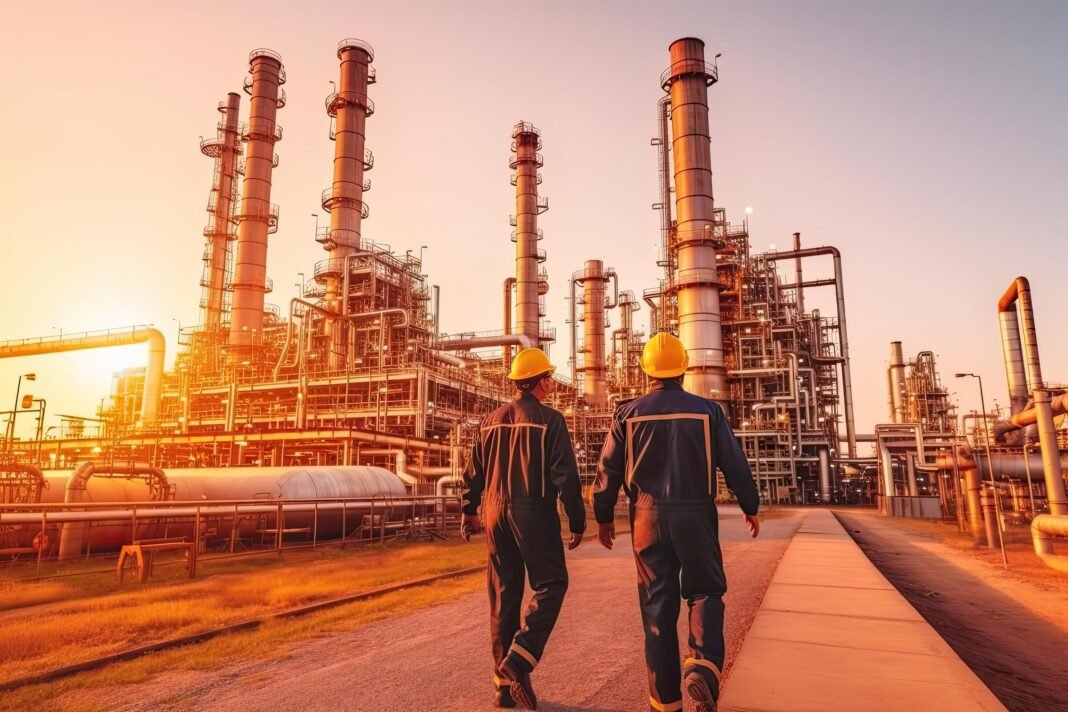
Oman is strengthening health, safety, and environmental standards across its oil and gas sector as operational activity continues to expand. The Ministry of Energy and Minerals is developing an integrated HSE framework covering legislation, governance, risk management, emergency preparedness, and environmental protection. The initiative aims to improve worker safety while supporting more sustainable energy operations.
The ministry is also encouraging energy companies to adopt stronger prevention measures and international best practices. The approach seeks to create clearer safety expectations across the industry while improving operational efficiency. Companies will need to strengthen their internal systems and ensure HSE considerations remain part of planning, design, construction, operations, and emergency response.
Oman’s Oil and Gas Law already establishes requirements for protecting workers, communities, property, and the environment. Concession agreements also require operators to comply with national legislation and relevant standards. Companies must additionally apply recognized international practices where appropriate. This regulatory structure provides the foundation for the ministry’s broader efforts to improve HSE performance.
The ministry monitors operators through inspections and regulatory oversight across concession areas. Field teams assess how companies implement their HSE plans and identify areas requiring improvement. These inspections provide regulators with greater visibility into operational risks while encouraging companies to strengthen procedures. Regular monitoring also supports better compliance across Oman’s growing energy industry.
Recent figures indicate progress despite increased operational activity during 2025. The sector recorded around 321 million working hours, compared with approximately 285.5 million hours in 2024. Vehicles and other operational activities also covered around 503 million kilometres, up from approximately 433 million kilometres a year earlier, showing the sector’s increasing operational scale.
Despite the higher level of activity, several important safety indicators improved during 2025. Lost-time accidents declined by 23 percent, with 30 incidents recorded during the year. Serious traffic accidents also decreased by 33 percent to 10 cases. Furthermore, the sector recorded no fatalities, providing an encouraging indication of improvements in workplace and transportation safety.
Zainab bint Ali Al-Saadi, director of the ministry’s HSE department, highlighted the importance of treating HSE as an integrated institutional responsibility. The approach covers the entire project lifecycle, meaning companies should identify and reduce potential risks from the earliest planning stages. This strategy places prevention and continuous improvement at the centre of operations.
The ministry is also promoting a stronger safety culture across Oman’s energy industry. Companies are expanding employee training, awareness programmes, and human-performance initiatives. Workers are encouraged to report potential hazards earlier and participate more actively in safety management. Some operators are also giving employees greater authority to stop activities when conditions appear unsafe.
Worker wellbeing is becoming another important part of the sector’s HSE strategy. Companies are increasing their focus on occupational health and mental wellbeing while strengthening medical preparedness at operational locations. This broader approach recognizes that workplace safety depends not only on equipment and procedures but also on employee health, awareness, decision-making, and working conditions.
Transportation safety remains a significant priority because energy companies operate across large geographical areas. Operators are expanding journey-management systems to monitor vehicle movements and identify potential risks. Vehicle monitoring technology can also help detect fatigue, distraction, and other unsafe driving behaviours. These systems are designed to reduce accidents during long journeys between operational sites.
Environmental protection is another major element of Oman’s developing HSE framework. Energy companies must comply with national environmental requirements while increasingly adopting internationally recognized environmental-management systems. The ministry is also supporting carbon-management initiatives across the industry, including efforts to reduce methane emissions and eliminate routine gas flaring by 2030.
Energy efficiency is also receiving greater attention across operational facilities. Companies are exploring ways to reduce energy consumption while maintaining reliable production. Renewable energy could play a larger role in future operations as Oman advances its wider sustainability objectives. These efforts connect HSE management with the country’s long-term ambition to reach net-zero emissions by 2050.
Technology is increasingly supporting safety and environmental management across the sector. Companies and regulators are using artificial intelligence, advanced analytics, digital reporting platforms, and smart monitoring systems to identify risks. Real-time data can help operators respond faster to emerging problems while allowing managers to identify recurring risks and improve operational procedures.
The wider strategy reflects the changing requirements facing Oman’s energy industry. Operators must maintain production while managing increasingly complex safety, environmental, and operational responsibilities. Strong governance and better data can help companies balance these priorities. Meanwhile, continued inspections and regulatory oversight can encourage operators to maintain high standards as activity increases.
The improved accident figures provide encouraging evidence that safety measures are producing results. However, the rise in working hours and vehicle activity also shows that risk exposure remains significant. Companies will therefore need to maintain strong training, monitoring, emergency preparedness, and worker engagement. Continued investment will be essential to prevent safety improvements from losing momentum.
Overall, Oman is moving toward a more integrated approach to health, safety, and environmental management across its oil and gas industry. The strategy combines regulation, inspections, technology, worker engagement, environmental measures, and operational improvements. Together, these measures could help companies create safer workplaces while reducing environmental impacts and improving long-term operational resilience.
Oman’s strengthened HSE framework also supports the country’s broader energy and sustainability ambitions. As operators improve safety systems, reduce emissions, adopt cleaner technologies, and strengthen environmental management, the sector can become more resilient. Continued government oversight will remain important for maintaining progress and ensuring companies meet evolving national and international standards.

