



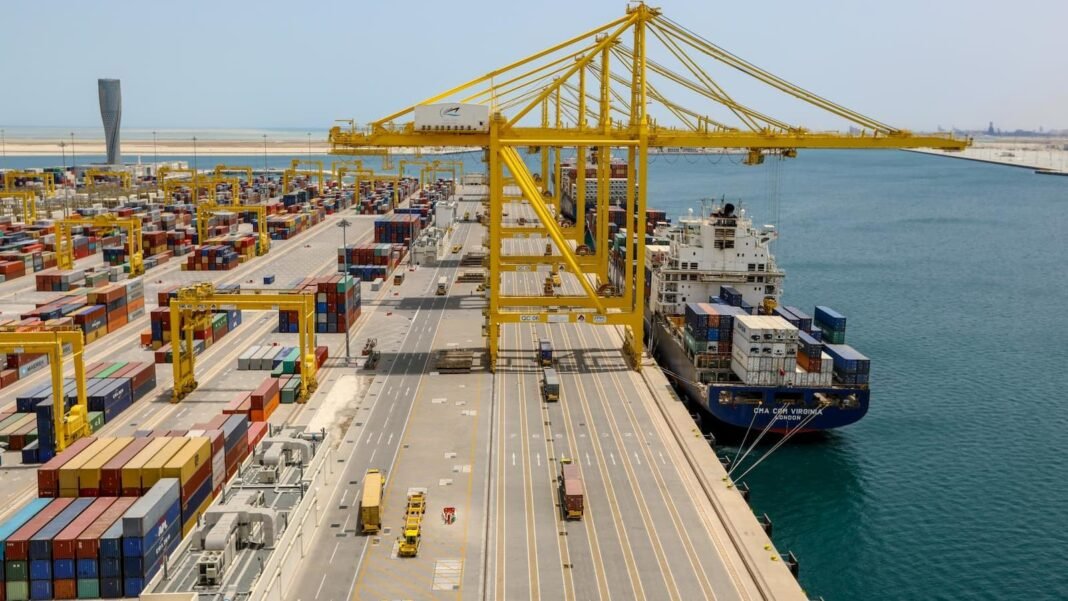
Qatar logistics hub ambitions are gaining momentum as the country strengthens its transportation, storage, and distribution capabilities. The country is also expanding food security initiatives and strategic reserves while seeking stronger international partnerships across agriculture, technology, and investment.
Qatar Chamber board member Mohamed bin Ahmed Al-Obaidli highlighted these developments during an economic forum in São Paulo. The forum brought together officials and business leaders from Arab countries and Brazil to discuss trade, investment, and economic cooperation.
Food security, agricultural businesses, and reliable fertiliser supplies were among the key topics discussed. Participants explored opportunities to build stronger and more resilient supply chains while expanding cooperation between Qatar and Brazil.
Al-Obaidli highlighted the complementary economic strengths of both countries. Brazil has major capabilities in agriculture and food production. Qatar, meanwhile, has developed significant expertise in energy, fertiliser production, logistics, and infrastructure.
These strengths could create opportunities for long-term cooperation across several interconnected industries. Greater collaboration could support investment in food production, fertiliser manufacturing, food processing, logistics, and agricultural technology.
Qatar has invested heavily in transportation, storage, and distribution infrastructure. These capabilities allow the country to move and manage goods efficiently across different stages of supply chains.
The country’s geographic position also supports its logistics ambitions. Qatar provides connections between Gulf markets and wider international trade routes. Modern transportation infrastructure can strengthen these links and improve the efficiency of regional and international distribution networks.
The development of a stronger Qatar logistics hub could support businesses seeking reliable access to regional markets. Efficient logistics networks can reduce transportation delays while improving the movement of essential goods.
International companies may also benefit from Qatar’s expanding infrastructure. Businesses often consider transportation, storage, and distribution capabilities when selecting locations for regional operations.
Consequently, continued investment in logistics could help Qatar attract more international companies and investment. It could also strengthen domestic businesses by improving their access to foreign markets.
Food security represents another important part of Qatar’s economic strategy. The country has expanded domestic food production while working to diversify its sources of imports.
Diversifying supply sources can reduce dependence on individual markets. It can also provide businesses and consumers with greater protection against international supply disruptions.
Qatar has also developed strategic reserves to strengthen food availability during periods of disruption. These reserves can provide additional protection when global supply chains face unexpected challenges.
Logistics and food security are closely connected. Efficient transportation networks help essential products reach markets quickly, while modern storage facilities can protect supplies and maintain product quality.
Cold-chain logistics is particularly important for food products. Temperature-controlled transportation and storage can help preserve food quality during international shipments.
Qatar’s logistics infrastructure could therefore support the development of stronger regional cold-chain networks. This could create additional opportunities for companies operating in food distribution, storage, transportation, and technology.
Brazil represents an important potential partner because of its strong agricultural sector. The country is one of the world’s major producers of agricultural commodities and has extensive experience across food production and processing.
Qatar can complement these capabilities through its energy, fertiliser, logistics, and investment sectors. Combining these strengths could support new projects across different stages of the food supply chain.
Fertiliser cooperation offers particular potential. Qatar has established production capabilities, while Brazil has a large agricultural industry that requires reliable access to agricultural inputs.
Stronger cooperation could therefore create commercial opportunities for companies in both countries. It could also contribute to more resilient agricultural supply chains.
The discussions in São Paulo also reflect growing interest in expanding Arab-Brazilian economic relations. While traditional commodities remain important, cooperation is increasingly extending into logistics, agriculture, food security, technology, and investment.
Technology is another area where Qatar and Brazil could expand cooperation. Al-Obaidli emphasized the growing importance of technology and artificial intelligence in modern agriculture.
Digital technologies can help farmers improve productivity while managing resources more efficiently. Artificial intelligence can also support forecasting, crop monitoring, risk identification, and production planning.
These technologies could create opportunities for agricultural technology companies and investors. Businesses could develop digital solutions that improve farming efficiency and reduce waste across the food supply chain.
Technology can also strengthen logistics operations. Digital platforms can improve inventory management, shipment tracking, and supply planning.
Artificial intelligence can help businesses forecast demand and identify potential supply disruptions. These tools could make food distribution networks more responsive and resilient.
Foreign investment is expected to remain important for Qatar’s food security and logistics ambitions. International capital can support new facilities, technologies, production capabilities, and distribution networks.
The private sector can also contribute expertise and innovative business models. Partnerships between local and international companies could accelerate the development of strategic industries.
Qatar continues to encourage private sector participation in areas linked to economic diversification. Logistics, agriculture, food processing, and technology can all contribute to broader economic growth.
For domestic companies, stronger logistics infrastructure can improve access to international markets. Businesses can potentially expand their customer bases and increase export opportunities when transportation and distribution systems become more efficient.
The development of a Qatar logistics hub aligns with the country’s wider economic diversification strategy. Qatar has traditionally relied heavily on energy-related industries, but it is increasingly developing other sectors to support long-term economic growth.
Logistics can contribute to this strategy by supporting trade, investment, manufacturing, agriculture, and international business activity.
A stronger logistics sector can also increase Qatar’s attractiveness as a regional business location. Companies seeking access to Gulf and international markets may benefit from the country’s infrastructure and strategic position.
At the same time, food security initiatives can reinforce the logistics sector. Strong storage and distribution systems help ensure that essential products remain available during international disruptions.
This connection creates opportunities for integrated investment across transportation, warehousing, agriculture, food processing, and technology.
The economic forum highlighted the potential for stronger cooperation between Qatar and Brazil. Both countries possess complementary strengths that could support investment across the global food system.
Brazil brings agricultural production, food-processing capabilities, and extensive experience in global food markets. Qatar can contribute energy, fertiliser production, logistics infrastructure, financing, and investment opportunities.
Together, these capabilities could support new commercial partnerships and strengthen supply chains.
Future cooperation could focus on agricultural technology, fertilisers, food production, food processing, cold-chain logistics, and investment.
Government officials and private sector leaders can also play an important role in turning these opportunities into practical projects. Stronger institutional cooperation could help businesses identify investment opportunities and develop long-term partnerships.
Qatar logistics hub ambitions extend beyond transportation infrastructure. The country is connecting logistics development with food security, technology, investment, agriculture, and international trade.
Continued investment in infrastructure and technology could strengthen Qatar’s position within regional and global supply chains. Strong regulatory frameworks and greater private sector participation could further support this development.
At the same time, international partnerships can provide access to new markets, expertise, technology, and investment.
Cooperation with Brazil could be particularly valuable because of the two countries’ complementary strengths. Their combined capabilities could support stronger and more resilient food and agricultural supply chains.
As international businesses seek reliable supply networks, Qatar’s infrastructure investments could create new opportunities across logistics, agriculture, food processing, fertilisers, and technology.
With continued investment and international cooperation, Qatar can further develop its role as a regional and international logistics centre. Its expanding infrastructure, food security initiatives, and focus on technology provide a strong foundation for future economic diversification.

